
Our 4th Qtr SPARC Winner!

How my experiences will provide my future clients with a spark to their lives and bring hope to their futures

Connie Wyatt learns she won the SPARC Award!

By Connie Wyatt, OT Student, University of Puget Sound, Grad Date 12/17

The word spark provides two types of definitions: a noun and a verb. The noun defines spark as “a small fiery particle thrown off from a fire, alight in ashes, or produced by striking together two hard surfaces such as stone or metal” while the verb defines spark as “to ignite.” Other definitions include: “a sense of liveliness and excitement,” “a small bright object or point,” and “a trace of a specified quality or intense feeling.” I love the simplicity of the verb, ‘to ignite.’ It is an action word which requires one to choose to do something. I like the implicit progression inherent in verbs. Verbs never stay in one place and as a future therapist, I want to constantly be moving towards a better, more glimmering (if you will) therapist. I have had many, many people ask me why I am always so smiley and happy all the time. I cannot help but realize that I have an incessant itch to ignite my life with kindness. I want to make others happy; I love the saying a ‘glimmer of hope’ because it implies that there is always a slight chance that something positive will happen. I rely on that saying each and every day of my life. I look for all the glimmers of hope from each day to provide me with a reason to wake up and give others with the glimmers they need to keep on progressing. My career as an occupational therapist relies on the notion that I will bring this spark into practice with each client; it is an energizing force and I feel eager simply writing about it. My future is bright and full of the kind of sparks that my future clients so desperately need from me. I am going to make a difference as an occupational therapist, but the difference I hope to make is one that each of my clients will believe they accomplished all on their own!

My focus on occupational therapy (OT) has been a constant in my ever-changing life. Although my life history is diverse, my attention always drew towards OT. In the last eight years, I spent my time doing many meaningful activities than some don’t get to do in a lifetime. Every job or opportunity I have taken is one that pushes me closer to my career. My eyes gravitate towards my co-workers, clients, or students who need this type of therapy in their lives.

Through the years, I have sought out many opportunities to grow and develop my skills as a compassionate mentor, friend and aide. Soon I will have the opportunity to use the skills I have been developing in my career as an occupational therapist. I have no doubt that lives will be changed and have been changed; if no one else’s, my own has been enriched. I hope my experiences in the following excerpts will help Ensign Therapy to understand the spark that will certainly transform the lives of those I work alongside with.

BRANDON

Is there anything that can bring more passion to an individual than personal experience with the person most dear to you? At the early age of 14, I developed the desire to become an OT. 11 years ago my older brother and best friend, Brandon, was hospitalized with a traumatic brain injury. It shattered my whole world. Initially, Brandon was only able to mutter `lil, lil, lil, lil’ when asked who I was. His brain function and actions were not collaborating. I had already witnessed a plethora of injuries, addictions, abuse and fights by this age with my older siblings, but this incident hit even closer to home (if that is possible). I couldn’t fathom the possibility of a best friend I couldn’t rely on like I did before. During those difficult weeks, I was given the time to relive memories with Brandon. I remembered a lot of good times and hoped that more were to come. Today, he is fully independent and has 95%+ brain function back. This experience gave me the ability to relate to the despair and grieving of family members, who are also our clients. It

also taught me the significance of time. Although, the rehab team was not in the forefront of my mind, I now realize that immediate intervention with OT is ideal and pertinent. OT clients will be much more likely to recover, the earlier they start working towards their goals. Brandon had to work with an OT, PT, speech pathologist, doctors, and nurses to successfully recuperate; teams are vital in rehabilitation and even my 14-year-old self realized that. I want to be a part of a team like the one that worked with my brother so I can change lives, every day, for the rest of my life.

HOME EVALUATIONS

As an OT student, I had the opportunity to take a trip to the Methow Valley in Central Washington where many individuals enjoy retirement. A group of us were given the opportunity to practice our home assessment skills in the homes of some of these individuals. I fell in love with the opportunity to provide recommendations for a safer, more livable space and was surprised by the knowledge that I, a mere graduate student, had to offer our clients. I immediately fell in love with working in the home and having the opportunity to quickly connect with people. Following this incredible experience, my entrepreneurial spirit led me down a series of networking paths and I have had the opportunity to advocate for my profession. I have connected with a well-known Certified Aging In Place instructor, Steve Hoffacker, and I have had the opportunity to connect with a seasoned OT who decided to open an Occupational

Therapy consulting business. My research caused me to stumble upon a bill that has not yet been passed which would provide a $30,000 tax credit for anyone over 65 who wants to install home modifications to prepare for aging in place. This information led me to work with my AOTA representative for the state of Washington to bring this bill to the attention of AOTA. Our hope is that this bill will be revised to include OT services, so the home modifications are assisting the special needs of each client. As occupational therapists we have a special ability to connect the home environment inevitable life events, but I am particularly eager about the opportunity to be a part of something bigger than myself. Many of the baby boomers would like to age in place and preventing falls and other incidents early on will provide more healthy opportunities for them to age in place. Sometimes the initial spark of my many creative ideas eventually fade (I have many entrepreneurial ideas), but I am sure that the deep meaning that this project has in my life will give me the motivation I need to carry out each step. I am passionate about the happiness that a safe home can provide for people.

BOB

Bob is my life coach in understanding the ins and outs of the emotional and physical difficulties individuals with SCI’s deal with. How lucky was I to stumble upon an ad he posted for a trainer. He needed someone to ride with him on his tandem bicycle designed for and by him. He himself is the survivor of a fall, which resulted in an iSCI and has lived with this condition for 25 years. Bob is helping me to develop empathy, understanding and love for people I have yet to meet. He is developing in me a very real mindset of putting myself in his shoes. Bob offers me opportunities to feel what it feels like to be him; he is honest, he is open and he is blunt. Not only do I get to go grocery shopping and biking with Bob, but also, more importantly, I get the life knowledge that he has obtained and offered me. I often write down his words so I can remember them during future encounters with clients. His willingness to help me will surely have a ripple effect for the rest of my life. Bob has further added to my purpose as an OT and my desire to enlighten lives with understanding.

REHAB WITHOUT WALLS

When Carol Decker came to our program last spring, I was forever changed by her determination to live her life to the fullest. She is a beautiful mother of two young girls although she has never seen her youngest daughter before. During her second daughter’s birth she experienced ample complications, which resulted in blindness, neuropathy in one hand, two below the knee amputations and the amputation of her left hand. Her words inspired me and still do to this day. She began to talk about her rehabilitation when she got back home and she began to realize the obstacles she was going to have to overcome. She was discouraged and depressed (for good reason)! Rehab Without Walls came in and worked in her home and community and she talked about how the team collaborated with her to try anything that might aid in her independence. She admitted it was a long road, but attributed much of her success to her team at Rehab Without Walls. I was touched, so I obviously decided to call Rehab Without Walls the next day. After a few months, I was given the position as a rehab specialist. I get the opportunity to work one-on-one with individuals who are further along in their recovery and require less attention from licensed therapists. The opportunity to work independently has taught me incredible amounts about myself as a future therapist along with my ability to rely on team members when I need their advice and help. I have learned to jump right in and not be afraid of social stigmas in the community and I have learned from my mistakes. I have learned about how much I care about my clients and how much their happiness matters to me. This continued experience has solidified my desire to eventually work in the home as an OT.

UNIVERSITY OF PUGET SOUND

The OT professors at University of Puget Sound are some of the best. They have taught me many important skills, but mostly they have provided me with the skill set to find the answer to any question that might arise in my future career. They have taught me to trust my clinical reasoning, but have also helped provide me with the skills I need to find evidence-based research to back up my practice. They provide hands-on experiences daily and have collaborated with us since our first day; I have envied my professors ability to increase our competence while simultaneously trusting our ideas and thoughts; this has enlarged my confidence as a future therapist (something I greatly lacked prior to graduate school). If there is one thing I have learned, it is that in occupational therapy it always depends on the person, the day, the environment, or the context. There is no black and white answer to any challenge and we must treat our clients as individuals. I am thrilled to use my creativity and education from UPS to better the lives of my future clients.

I know all of the experiences that I have cited (and so many more) have helped prepare me for a successful career in occupational therapy. I could not have jumped into this profession without the plethora of experiences I have in my tool belt. Luckily, these experiences continue to build upon one another and I will continue to grow as a therapist for the rest of my career. I will never be fully prepared for every situation, but I can continue to learn and become the spark that someone needs to get over the hurdles that they face. I already love my career as an occupational therapist and I know that I will make a difference. I cannot wait!

Compliance Corner

Compliance Corner: Are You a Leader?

By Jack Rolfe, PT, MNA, CHC, RAC-CT

Lead Compliance Partner, Milestone & Endura

If your actions inspire others to dream more, learn more, do more and become more, you are a leader.” ~ John Quincy Adams

My first memory of the image of leadership was formed when I was eleven years old. I was with a group of my peers participating in a scouting activity at our church. My father was also in attendance as one of the scout group leaders. The individual in charge of the meeting was at the front of the room conducting the function. This person asked if everyone in the room would move closer to the front row. I remember looking at my buddies and we were all frozen with the thought “this would not be cool to do what the leader had asked us to do.” Then a sharp impulse came into my mind. I stood up promptly and stated “come on guys, let’s move up.” Everyone followed and the task was completed. Upon returning home that evening my father said to me “That was amazing what you did today.” I had no clue what he was talking about and stared at him like only an eleven year old could do. He repeated to me what he witnessed in the simple act of moving with my friends to the front of the class. He stated, “You are a leader.” His statement touched my soul deeply and has remained with me throughout my life.

In his book, “Executive Instinct,” Nigel Nicholson of the London Business School suggests that there may be a leadership gene — that some people are just driven to be in charge. But the University of Michigan’s Noel Tichy — in his book, “The Leadership Engine” — declares that leadership style and abilities emerge from experiences. I propose that leaders emerge from a combination of both these declarations. I add one additional idea for you to ponder. I believe that inside each one of us there is a leadership gene and it takes experiences to bring it out. Have you discovered your leadership gene?

In the movie “Facing the Giants” actor, Alex Kendrick, plays the role of high school football coach, Grant Taylor. In one scene Coach Taylor is instructing his team and specifically counsels his player, Brock, to remember he has been gifted with leadership so do not waste it! I have concluded through my life experiences that there is one sure way to develop leadership. This is accomplished by assisting others to become leaders in their own lives. When you facilitate someone finding and using their leadership gene then yours blossoms.

As we move into the year 2017, will you become a leader of your rehab team in attaining additional knowledge in regard to Compliance? Will your rehab team become the leader of Compliance in your facility? Will your facility become the leader of Compliance in your Market? Will your Market become the leader of Compliance for the Ensign organization? It can all begin with you!

As Compliance Partners go onsite when conducting the annual Medicare Systems Compliance Audit (MSCA) much of our focus on the therapy program is governed by two areas. First, is the Medicare Policies and Procedure for our organization. Second, is rule and regulation found in the Medicare Benefit Policy Manual, Chapter 8 – Coverage of Extended Care (SNF) Services. We find the successful buildings to be those who are most educated on what is expected by the Medicare Program and then they apply that education.

So, I extend to you an opportunity to express your leadership gene. Here is the challenge…Develop a creative way to present/discuss one item from the above mentioned Medicare resources each week in your rehab team meeting. Use specific policy/procedure and rule/regulation. Then create a way to spread that format to your building, your Market, and onto the Ensign organization. You can become a leader in attaining and sharing knowledge with your peers and beyond. I am eager to see the results. Will you accept the challenge?

“A leader is one who knows the way, goes the way, and shows the way.” ~ John C. Maxwell

Congratulations to Our New SPARC Winners!

Following is an essay written by our SPARC (Scholarship Program And Recognition Campaign) winner that garnered her $2,000 toward her education.

Julie Dunn, PT, Grad Date: May, 2016, Idaho State University

The making of sparks: A profession of excellent clinicians giving superior care to every patient

My lifelong passion for excellence has prepared me to be a unique agent of change, hope, and healing in the lives of the hurting and the underserved. I seek to continuously be improving inclusion, personal aspects of care, patient education, advocacy, and professional training for myself and for our profession. When my patients entrust me with the honor of helping guide them back to healing, I want to have full confidence knowing I have done everything possible to get them there.

My passion for excellence has been something that has driven me throughout my years of schooling, sometimes even becoming a point of resistance: While earning my bachelor’s degree, I was not content to simply obtain a common degree that would give me the most prerequisites for graduate-level education. Multiple advisors frowned on my unwillingness to major in health science, biology, kinesiology, or exercise physiology when applying for DPT and DO programs. In fact, I had to switch advisors multiple times to find someone that would work with my unique vision for my practice: I insisted on using my bachelor’s degree to obtain skills I wouldn’t learn otherwise so that I could reach the people most health care professionals can’t. Ultimately, I obtained a Bachelor of Arts in Spanish language on top of the normal prerequisites. I kept pressing onward, and by the time I started my DPT program, I was a qualified Spanish medical interpreter.

Now that I’m at the end of my formal education, my passions for excellence and inclusion still drive me to provide the best care to the underserved. My Spanish degree has proved particularly useful. One group I consider to be in underserved are non-English speaking patients: Patients with Limited English proficiency (LEP) are documented to receive not only less but also poorer-quality care, creating a disparity even greater than what exists based on ethnic and minority classifications alone.(1) Research is still being called for with regard to cost effective ways of reducing the negative effects of language barriers in health services.(2)

As an interpreter and a physical therapy student, I have personally witnessed LEP persons receiving less patient education, less examination, and overall less care during interactions with medical/therapy staff. I witnessed this despite working with outstanding physicians, nurses, and physical therapists who longed to surpass language barriers and eliminate the health disparity. Still, the quality of care remained inexorably constrained by language barriers, logistical issues with interpreter schedules, time lost during interpretation, and limited ability to communicate to build rapport. That is why, on my affiliations, I have taken on all the Spanish-speaking patients. I found myself staying multiple hours after my own shifts in order to help nurses communicate to deliver necessary medication, calm post-traumatic brain injury agitation, and figure out how to contact family members. It would make a long essay to describe all the times I have heard “I’m so glad you speak Spanish” coming from both English- and Spanish-speakers, and how many times my patients have confided in me feelings about their care, and questions they did not feel comfortable sharing with other providers. In my own practice, I will be able to communicate directly with patients without losing time or emphasis going through an interpreter. I will be able to provide more education, feedback, and understanding so that Spanish-speaking patients can confidently take charge of their own health and recovery.

Through my experience working in physical therapy from the office, technician, and now practitioner perspectives, I have added another group to my list of underserved populations: women with pelvic floor dysfunction. Disorders such as chronic pelvic pain, pelvic organ prolapse, and urinary incontinence are socially limiting and often privately debilitating problems. For example, I worked with someone who had excruciating tailbone pain so bad she could not sit, meaning she could not work, and was at risk for developing on opioid addiction. She had been to see two other PTs without success. However, thanks in large part to my post-doctorate training in pelvic floor assessment and treatment, she was able to return to full activities and sit a full day at work without symptoms.(3) This all happened after just one treatment session together! This is the kind of spark I want to be in my patients’ lives.

I am passionate about bringing high-quality, emotionally-sensitive care to these individuals who suffer privately because of shame, embarrassment, or simply not knowing what options exist for them. In school, I had the opportunity to perform qualitative and survey research with participants in one of our community health grants. I designed a survey to assess pelvic health/women’s health concerns and unmet needs in our population, who had already been involved in the grant for several years. We found that many of our participants suffered from quality-of-life-limiting pelvic floor dysfunction, and not one knew how treatable it often is! Even though each participant had biweekly interactions with a certified women’s health PT and at least yearly interactions with physicians, not one had addressed the uncomfortable subject. Neither had they received education on treatment for their other disorders within the women’s health physical therapy realm, such as osteoporosis or lymphedema. This research was presented internationally to help bring awareness of our responsibilities as PTs to at least connect these patients with the right resources. If we don’t start the conversation, it’s likely they will continue to miss valuable treatment. My passion for this excellence in PT and learning has already carried me to four continuing education courses in my last year of school. I also feel strongly about sharing that knowledge, so I sought opportunities to help make my peers better practitioners also: My school hosted me as a guest lecturer for underclassmen in the physical and occupational therapy programs on two occasions to discuss pelvic floor disorders and other physical therapy treatment options. I also got a significant piece of medical equipment donated to my school so that our students could learn about mechanical hip traction. I found it to be one more tool we can use to spark hope in those inappropriate for surgery, delay surgery, and best promote an active lifestyle until surgery best option.

To continue working for the benefit of more than just my own future patients, I have mentored numerous students in the program graduating after me. I was elected to serve multiple terms as the president for the Student Physical Therapy Association and the Director of Programming for the national Student Special Interest Group on Women’s Health. I want to find the best ways to help my patients, and share it with as many of my peers as possible. I believe when we all work together, we can increase the quality of care our patients receive.

Perhaps the best way to conclude my reflection on how I am going to be a spark in my patients’ lives would be with comments from my patients thus far. I was fortunate to work each semester to provide exercise testing and prescription to members of the community over age 55 with low socioeconomic status. I have had long conversations with several members, with them thanking me for what I helped give them: encouragement to begin taking walks again, confidence to play with grandchildren, better balance from practicing my recommended HEP while preparing dinner, and hope for a healthier and happier way of living. I want every one of my patients to leave my care with the same impression one patient described to me in a surprise thank-you note: “Thank you for being in my life. You are very special, caring, and you will be another bright star for everyone you help. You will always be a bright star in my journey.” (3) I want to continue being that “bright star,” that spark,”and I know that with this scholarship, I will be able to get even better training so that I can be.

  1. Saha S, Fernandez A, Perez-Stable E. Reducing language barriers and racial/ethnic disparities in health care: an investment in our future. J Gen Internal Med. 2007;22(Suppl 2):371-372. doi:10.1007/s11606-007-0372-4.
  1. Schwei RJ et al. Changes in research on language barriers in health care since 2003: A cross-sectional review study. Int J Nurs Studies. Feb 2016;54:36-44. doi:10.1016.injurstu.2015.03.001.
  1. Shared with permission.

Rehabilitation and Focused Dementia Care Survey

Rehabilitation and Focused Dementia Care Survey
The Courtyard Rehabilitation & Healthcare Center is a 56-bed facility that has been selected to participate in pilot of a Focused Dementia Care Survey, which examined dementia care in nursing homes. The survey examined the processes for prescribing antipsychotic medications and was later expanded to look at standards of care along with over utilizations of antipsychotic medications.

The Courtyard was selected for this pilot program due to a high census of people with dementia diagnoses. A survey was conducted in March 2016, and it was determined that 49 out of 51 residents had a dementia diagnosis.


Method

We selected five residents who had a diagnosis of dementia (Alzheimer’s, Lewy body, vascular disease and other dementias) and required different levels of assistance with ADLs. The residents were screened by Physical Therapy, Occupational Therapy and Speech Therapy. Our method included the following steps:

  • The involvement of and conversations between facility leaders, including the DON, unit managers, medical directors and administrators, were examined for appropriate individualized approaches to initiate care.
  • Interdisciplinary and intra-disciplinary conversations about specific triggers of distress as well as desired outcomes were monitored among disciplines and across shifts.
  • Staff consistently communicated about the plan of care during IDT meetings.
  • Residents were examined for any sudden change in condition and medical causes of behavior (delirium or infection).
  • Alternatives to psychopharmacological medications were discussed. These included family/caregiver involvement, rehab, activities, and the Music and Memory program.
  • Therapy established a plan of care for residents having deficits in safety awareness, poor static/dynamic balance with ADLs, difficulty with bed mobility, sequencing with dressing/hygiene/grooming, orientation to facility, and poor phases of gait.
  • Residents participated with rehab services for an average of 27 days. Nursing, family/caregivers, physicians, activities and restorative aides worked closely with the rehabilitation department, reporting positive and/or negative changes in behavior.
  • Specific preventive measures to undesired behaviors were also determined to each individual, such as time of day.
  • We integrated treatments with morning ADLs (getting out of bed, grooming, dressing, hygiene, transfers, toileting, walk to dine, etc.).
  • We worked closely with the Activities Department and also encouraged family involvement.

Conclusions

Patients who were at a higher level of function, by requiring the least amount of assistance outside therapy services, showed the most significant improvement physically with rehab services. We saw success with nursing staff examining alternatives to psychopharmacological medications, family and caregiver involvement, and individualized activities determined by the Activities Department.

Lower-functioning residents showed improvement with alertness, engagement with activities and family members, decreased anxiety/agitation, and responsiveness to nursing with Music and Memory. As part of the Music and Memory program, iPods were loaded with specific songs to trigger memories of past events such as weddings and anniversaries.

Residents continue to work with restorative, Activities Department and nursing for the most effect non-psychopharmacological treatments. Ultimately, the goal is to maintain highest level of function and improve residents’ quality of life.

Submitted by The Courtyard Rehabilitation & Healthcare Center, Victoria, TX

Four Reasons Why Cardiac Post-Acute Rehab Care Fills the Gap between Hospital and Home

Cardiac PARC fills gap between hospital and home
 
Every 42 seconds, a person suffers a heart attack. Despite the fact heart disease remains the leading cause of death in both men and women in this country, the incidence of death because of heart disease is declining. And if you are one of the more than 30 percent who survived a heart attack last year, consider yourself lucky. Your second chance at life is about to get better, and the staff at Monte Vista Hills Health Care Center is here to help.

“I’ve seen this Heart PARC (cardiac post-acute rehab care) program help numerous lives for the better,” said Clayton South, executive director for Monte Vista Hills. “It has provided excellent outcomes throughout the industry, and I’m excited about its implementation here at Monte Vista.”

The concept of providing rehabilitation therapy is not new, but to offer services that cater specifically to cardiac care is a tremendous resource for patients and their families who are facing a permanent life-changing event. Here are four reasons why this cardiac program makes my heart skip a beat.


1. The staff provides focused care.

While other rehab therapy centers address a variety of conditions, this program focuses on the heart and all of the factors associated with recovery and education. Many patients are not yet ready to return home after cardiac surgery or a cardiac episode. This program bridges the gap that ensures patients are physically and emotionally prepared to return home safely.

“This isn’t just therapy. Instead, this is an interdisciplinary program,” said Dr. Jared Lundquist, director of rehabilitation for Monte Vista Hills. “It’s not just about the therapy but the skilled nursing and everyone else involved in this program.”

This multi-disciplinary approach focuses on the specific needs and concerns often shared by cardiac patients.

“Our team works together to progress each patient through five care levels and prepare them to succeed at home,” Lundquist said.

2.The staff communicates with the hospital.

The highly skilled, board-certified cardiac specialists review each patient’s medical history and regularly collaborate with the cardiologist to design a personalized care plan that matches the patient’s level of needed care, diet, risk levels, and ability to function.

“Each care plan is specific to the patient,” South said.

And the cardiologist is kept informed and conferred with during each phase of recovery.

3. The staff builds a relationship with each patient.

The one-on-one care each patient receives creates a unique and helpful relationship; the weekly interaction with patients means staff can perform ongoing assessments and evaluate the patient’s progress, subtle changes in symptoms, and projected responses to recent procedures, diet, medications, exercise levels, among other things. Should symptoms worsen, the staff can perform acute therapies to improve the patient’s condition.

4.The staff is prepared should immediate care be required.

The PARC environment is designed to focus on progress and recovery. During treatment, patients are assisted by a staff possessing acute knowledge in overall heart function, abilities, diseases and behaviors. This staff also knows the history and past procedures of each patient and directs a patient’s treatment plan to prepare them for existing challenges at home. But should a setback occur and emergency care is needed, it is good to know patients are surrounded by a qualified staff that can perform life-saving care until the patient can be admitted to the hospital. This reduces the chance of irreversible damage and increases a patient’s prognosis for a full recovery.

“The comfort and safety our patients feel while in this care makes a huge difference in the overall recovery process,” South said.

By being able to provide focused care, collaborate with team members and specialists, build a supportive relationship with patients and be prepared for whatever need should arise, the Monte Vista Hills is proud to offer this high-level cardiac care to the community.

Published online by The Idaho State Journal, Nov. 4, 2016
Submitted by Monte Vista Hills Health Care Center, Pocatello, ID

Cardiac Specialty Programs: Why Should They Matter to You?

Why should cardiac programs matter to you? Research shows that most hospitals have a cardiac diagnosis within their top five admitting diagnoses. CMS has identified heart failure and MI as two of the most expensive diagnoses for Medicare, and new cases are increasing at a rate of 550,000 annually. The next mandatory bundled payment being considered by CMS is cardiac conditions.

Where Does the SNF Fit Into All of This?

We can be the best post­acute care partner in our communities by sharpening our clinical skills in nursing and therapy to bridge the gap between a hospital stay and home.

Since implementing the Heart PARC (post­acute rehab center) program in 16 of our buildings over the past year, we have begun to see some encouraging results:

  • Increased skilled census for this condition type
  • Reduced re­hospitalization
  • Increased functional outcomes using the CARE data
  • Increased confidence in working with clinically complex patients due to focused training and education
  • Increase confidence from our health partners in our clinical expertise

The graph below shows the cardiac-­specific skilled census at Park View Post­Acute (PVPA) in Santa Rosa, California, from September 2015 (first month of Heart PARC implementation) to December 2015:

 
Graph - Skilled Cardiac Admissions
 

This graph shows the shift in skilled census at PVPA from September 2015 to December 2015:

 
Shift in Skilled Census
 

The below graph shows PVPA hospital readmissions from September 2015 to July 2016:

 
30 Day Hospital Readmission
 

The side-­by-­side graphs from PVPA below show that during the eight months of implementation, the cardiac census went from 20 over an eight-month period prior to HP up to 81 patients in the eight-month period post-Heart PARC. The bars below demonstrate a significant change in function using the CARE item set. Prior to Heart PARC implementation, on average, the cardiac patients still required 25 percent physical assistance at discharge. After Heart PARC implementation, on average, the patients only required verbal cueing.

 
Jan-Aug 2015
Sep-Apr 2016
 

So How Do I Get Training in My Building?

Currently therapy and clinical resources are being trained in a train-­the-­trainer format. Please signify your interest in bringing this program to your building by reaching out to your therapy or clinical resource, and we will get information to you on first steps.

Ensign Therapy Job Fair

Therapy Career Fair Calendar

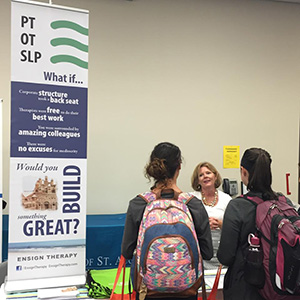
Graduating soon? Looking for a change in your therapy career? If you’re a physical therapist (PT), occupational therapist (OT), speech language pathologist (SLP), PTA or OTA, visit the Ensign Therapy booth at a nearby job fair or conference and learn about career opportunities. Therapists thrive in our unique anti-corporate culture.

Upcoming Career Fairs and Conferences

Build Something Great

Ensign Therapy Is Offering FREE CEUs!

Borderline or Bulletproof
Borderline or Bulletproof?
Strategies for Medicare Therapy Documentation
in SNF and Outpatient Settings

by Lori O’Hara, MA, CCC-SLP
Director of the ADR and Appeals Team for Ensign Services, Inc.
(2 credit hours)

Free! No cost or obligation! (But seating is limited…)

Register today by contacting Jamie Funk at 1-877-595-0509 or email
jfunk@ensignservices.net

Two Class Times and Locations

Tuesday, June 21st, 6-8 pm
Gateway Transitional Care Center
527 Memorial Drive
Pocatello, Idaho 83201

Wednesday, June 22nd, 6-8 pm
Parke View Rehabilitation & Care Center
2303 Parke Avenue
Burley, ID 83318

Free CEUs

Develop a vocabulary to have at your fingertips that shows how your services are reasonable and necessary, and showcases your skill as a therapist. This course will show you how to think your way through the CMS requirements to quickly and efficiently find the language you need so your documentation can stand up to an audit.

Lori O’Hara, MA, CCC-SLP, directs the ADR and Appeals team for Ensign Services, Inc. and teaches documentation strategies designed to help amazing therapists be equally amazing documenters of their services. She has more than 20 years of experience in the field of SNF and outpatient therapy as a director and trainer.

This course is free but pre-registration is required. To register please contact Jamie Funk:
1-877-595-0509 or jfunk@ensignservices.net

Compliance Corner

Are We on the Same Frequency?

Compliance CornerWe are well into year three of our Corporate Integrity Agreement (CIA)! Many of you have already had an onsite Medicare Systems Compliance Audit (MSCA) conducted by one of our compliance partners for Medicare Part A services provided to residents in our facilities. We have seen many examples of excellent therapy documentation supporting the vital therapy services that help our patients improve their quality of life and in many cases return home or to a lesser level of care.

One trend that has been observed while completing the MSCAs is either over-delivery or under-delivery of therapy visits according to the Plan of Care or Updated Plan of Care and subsequently, physician’s orders.

For the evaluating therapist, there are many things to consider when developing the Plan of Care or Updated Plan of Care. When determining frequency, factors such as the patient’s medical condition, activity tolerance and cognitive level should be considered. Services must be ordered by a physician and consistent with the Plan of Care or Updated Plan of Care. Ensign Rehabilitation Policy #215 “Clarification Orders” requires documentation of frequency as one of the components of a clarification order. If frequency of visits in a given week is exceeded without a physician’s order, this could result in a disallowance of services. Frequency of therapy treatment provided is not only something that we look at on our MSCAs, but historically by outside auditors as well.

There are situations when an increase in frequency is clinically indicated such as an improvement in the patient’s medical condition — effective pain management, change in weight-bearing status or a remediated precaution. In addition, there are situations when an increase in frequency is indicated on a practical level in order to facilitate outcomes related to a revised discharge plan or caregiver training. For example, a patient may be discharging home and the caregiver is only available on Saturdays for training. All of these scenarios would support additional treatments for the patient as long as a physician’s order is obtained and the POC/UPOC is revised to reflect the new goals, approaches and frequency of services.

Conversely, a reduction in the frequency of therapy services may also be indicated at times. The reasons for this may be related to a decline in the patient’s medical condition such as a UTI or low INR levels. In addition, there may be logistical reasons related to the availability of the patient for treatment such as scheduled dialysis treatments or medical appointments requiring travel. Documentation related to the reason for a missed treatment should be found in the medical or treatment record. If there is no documentation in the record for decreased treatment, then services are not compliant with the established POC/UPOC or the physician’s orders.

The following guidance was provided to the field with the recently updated POSTette titled “Plan of Care”:

Frequency refers to the number of times in a week treatment is provided.

In Rehab Optima the start of the care date (evaluation date) initiates the seven-day cycle in which therapy must be delivered to the patient as necessary to meet the physician-prescribed dosage.

In order to establish organizational consistency, the evaluation encounter (regardless of whether treatment was provided on the same day or not) will count as part of the frequency the first treatment week for most payers.

However, for RAI purposes, number of treatment visits refers only to the number of days in which treatment was provided during the week, and those treatment days are the only days counted for the purpose of the MDS, which may or may not be used for payment with some payer sources.

Exceeding frequency of visits in a given week (whether or not treatment was provided on the day of evaluation) may or may not result in a disallowance of services and will be reviewed on a case-by-case basis.

As an overall reminder of regulatory requirements for Medicare Part A, please see the additional information as follows:

According to the Medicare Benefit Policy Manual Chapter 8, skilled therapy services must meet all of the following conditions summarized below:

    • The services must be directly and specifically related to an active written treatment plan that is based upon an initial evaluation performed by a qualified therapist after admission to the SNF and prior to the start of therapy services in the SNF that is approved by the physician after any needed consultation with the qualified therapist. In those cases where a beneficiary is discharged during the SNF stay and later readmitted, an initial evaluation must be performed upon readmission to the SNF, prior to the start of therapy services in the SNF.
    • The services must be of a level of complexity and sophistication, or the condition of the patient must be of a nature that requires the judgment, knowledge and skills of a qualified therapist.
  • The services must be provided with the expectation, based on the assessment made by the physician of the patient’s restoration potential, that the condition of the patient will improve materially in a reasonable and generally predictable period of time; or the services must be necessary for the establishment of a safe and effective maintenance program; or the services must require the skills of a qualified therapist for the performance of a safe and effective maintenance program.


  • The services must be considered under accepted standards of medical practice to be specific and effective treatment for the patient’s condition.
  • The services must be reasonable and necessary for the treatment of the patient’s condition; this includes the requirement that the amount, frequency and duration of the services must be reasonable.

References and Cross-References:

Centers for Medicare and Medicaid (CMS) Benefit Policy Manual 100-2; Chapter 8; Sections 30, 40.1

Ensign Rehabilitation Policy #215 “Clarification Orders”

POSTette: Plan of Care

RAI Manual

Meet Our New SPARC Award Winners!

SPARC
Congratulations to our most recent SPARC award winners, Catherine Whitlock and Chelsea Shearman! Read their inspiring essays below.
 

Catherine Whitlock, DPT student at the University of Washington, graduating in June 2016

To spark someone’s life is to provide that radiant moment of support and happiness that leaves a bright ember of a memory glowing long after its lighting.

Por favor, ayudenos. Imagine being invited into a home of someone you met less than a week ago, and they’ve asked for help. They speak an entirely different language, and they’re looking for professional guidance and suggestions to improve their daughter’s quality of life. Just over a year ago, I found myself in this exact situation while volunteering for Manos Unidas, the only private, not-for-profit school for Special Education in Cusco, Peru. I was fortunate enough to be traveling with a licensed physical therapist, and three other doctorate of physical therapy students. That day, our physical therapy mentor, I, and my colleague entered the home of one of Manos Unidas’ students with cerebral palsy to experience and better understand her home setup, the care she received, and, we hoped, to answer her mother’s burning questions regarding her continued care.

The house accessibility was notably impressive, with a spacious first floor, and the student had her own room. Her Mom showed us her resourcefulness in creating bolsters to use for exercises and expressed a profound interest in what more she could be doing to aid her daughter. The conversation initially revolved around positioning, sleeping, and demonstrating several new techniques to increase this sweet little girl’s interactions with the environment and people around her. In my mind, the most important exchange that day was between the physical therapist and the student’s mother. It was a challenging conversation concerning maintenance therapy versus improvement from therapy. The mother struggled at times to fully understand the difference between the two when her daughter was predicted to live 2-6 months by one doctor, and was also predicted to walk again by another doctor. These very conflicting prognoses are understandably confusing. She continued to express her frustration with the medical information she had received to date, and essentially asked the physical therapist, “What’s the point of therapy?”

Then came the spark. That blazing, powerful moment of caring connection as the therapist explained how physical therapy enabled the little victories in one’s life. Those two extra seconds of holding her head up and smiling at a loved one. The ability to grasp a favorite toy or point to something that she wants. That brief moment, that brilliant spark, shone a light into her life and the mother found new resolve to continue physical therapy with her daughter for those little victories.

Throughout my lifetime, I have welcomed multiple opportunities to interact with individuals of different social, cultural, and economic backgrounds. Yet it was in the work of this day in my budding career as a physical therapist that I discovered the crux of what inspiration I will bring to my interaction with every patient. My mentor physical therapist showed me through action exactly how to bring a positive light into any situation, and to celebrate the little victories with each person so they may move forward for the better. All of these moments have provided the framework for my career plans and goals, which resonates through the core of my very being. Each day I hope to rise anew to find opportunities to learn, teach, and share my passions and compassion with those I walk alongside on their path of healing. It is with the dedication of my life as a physical therapist that I hope to holistically serve those who are in the most acute need, to inspire others to do the same, and to develop programs that foster relationships and opportunities to serve the global community.

Quality, collaboration, and lifelong learning are a few of the principles at the heart of my interests in physical therapy. Throughout my educational and clinical experiences, I’ve found unwavering passion working with patients in an acute care setting. My drive to provide them with quality, safe, effective, efficient care is insurmountable, and I currently find myself in pursuit of an acute care residency in the hope that I will further develop myself as a clinician to provide the best patient-centered care possible. Intimately collaborating with other like-minded individuals in the field, I will be ever better equipped to utilize the research that develops evidence-based practice as it meets patient case scenarios. This passion for learning is one in which I proactively seek the tools to succeed, not the answers. My academic drive is for mentorship in which I am trusted as a capable colleague. The amount of intentional effort that I pour into this residency will directly correlate with what I gain from it, which impacts the quality of patient care that I can provide. My motivation to earn something through an environment rich with learning opportunities has never been greater.

Once established as a clinician, I hope to embody my passion for learning as a clinical instructor, as well as becoming a part-time instructor within either a physical therapy assistant or doctorate of physical therapy program. In my time as a student of physical therapy, I have continually expressed this deeply held desire to my mentors and have even been granted the opportunity to guest lecture on physical therapy as a piece of the rehabilitation team for the University of Washington’s Speech and Hearing Sciences: 533 Medical Speech Pathology course. Taking this presentation’s feedback in earnest, I intend to practically apply it within the acute care residency. This residency exists as the ideal catalyst for my dream of teaching as it includes the opportunity to be a teaching assistant for two acute care residency courses for a doctorate of physical therapy program. My goal as a teacher is to foster an environment that enables individuals to revel in this meeting of research and best practice, creating a ripple effect among the profession for better patient-centered care.

Beyond the classroom, I find advocacy and equity as essential components to my future contributions to physical therapy. I hope to develop and lead a program that connects physical therapy students and clinicians with other medical disciplines for global service opportunities to advocate for those who are under-resourced. It is a moral and ethical obligation to provide physical therapy services to those without access to care for financial reasons, from a lack of availability of services, or in the event of a disaster.

The spark in my life behind this goal comes from my experience as president of Global Rehabilitation Organization at Washington (GROW). GROW has provided opportunities and structure for me to participate more directly within the global community. These unique learning experiences have enabled me to collaborate with other healthcare students and clinicians, to practice cultural competency, and to transcend border, language, class, race, and ethnicity. Because of this, I know that combining my passion for local service, learning, sustainable international medical efforts, and inspiring best patient-centered care can all be realized through creating or collaborating with programs that cultivate compassion in action through globally aware service-learning opportunities. Organizations that advocate for equitable services on a local and international scale will give back to the global community through the power of physical therapy.

Perhaps then it is Mother Teresa of Calcutta who best encapsulates my deeply held vocational desire to serve as a holistically minded physical therapist — for as she boldly said, “Prayer in action is love, and love in action is service. Try to give unconditionally whatever a person needs in the moment. The point is to do something, however small, and show you care through your actions by giving your time. … Do not worry about why problems exist in the world — just respond to people’s needs. … We feel what we are doing is just a drop in the ocean, but that ocean would be less without that drop.”

There are countless people with physical needs, and my integral role in restoring function, promoting mobility, reducing pain, and preventing disability is but a moment of an individual’s lifetime, a drop in their ocean, a fleeting spark. Yet if I can serve as a shining spark, however small, who joyfully strives every day to bring compassionate, ethical and effective care to contribute to each of my patient’s well-being — that would be more than enough. For in intentionally meeting their needs, the true difference is made in empowering them to share this small positive contribution in turn, and multiply it within their own, greater communities of support and ever further still. It is in holistically healing all persons that physical therapists hold the power to revitalize communities, the spark to change lives we ourselves will never touch. Patient by deserving patient, victory by only seemingly small victory, our care empowers others to heal and better illuminate our world.

Chelsea Shearman, SLP, August 2015 SLP graduate of Northern Arizona University and student intern for Sabino Canyon

“Sister, eat, stop, chase.” These words, given to me in picture symbols, helped shape my life, ignited my spark and fueled my passion for wanting to become a speech language pathologist. My sister, a mere 14 months younger than I, was born with autism and is low functioning. Early in her life, doctors thought she did not have the aptitude to learn language. When my sister turned 4, however, a wonderful speech pathologist saw potential and taught her and me in therapy sessions how to incorporate the Picture Exchange Communication System (PECS) into our lives. Shortly after, this sentence appeared on the table before me and changed the course of our lives. My sister has never stopped learning; neither have I.

My flame grew as I learned to celebrate and embrace the differences in others at a young age. I volunteered in my sister’s classroom and went with her to early intervention therapies, as well as childhood programs for individuals with special needs. I got to know and love amazing individuals whom others considered “special” and how each of them had their own strengths, weaknesses, likes and dislikes. What worked with my sister did not work for them, and I had to learn how to build rapport with each individual and get to know each of them specifically. I shared my insights with those around me as I gave speeches about my sister in local charity fundraisers, went to IEP meetings, doctor’s offices and wanted to learn more about how to help others around me.

I continued my learning when I was 15 and volunteered in an AIDS orphanage serving the people in Uganda, Africa. First, getting there was a challenge. I had to raise money and worked hard to make my goals. The experience there was like nothing I had ever done; for such a short time of being there, I learned so much about life. While going in with the mindset of helping others, I, in turn, learned more from the people I was “serving” than I thought possible. Learning the needs of the people of Uganda and focusing on what was essential for them was way more vital than helping them with what I thought they needed. I was challenged with language acquisition and being immersed in a vastly different culture. Things were so foreign and strange, and I often made lots of mistakes. This taught me that true greatness, success comes only through trial and error. I learned about the importance of culture and background and was blessed with the patience of those Ugandan people who helped me grow.

With this experience I was excited to get a jump-start into my career and started by graduating high school at 16. In college I volunteered in undergraduate research in the “Profiles of Working Memory & Word Learning for Educational Research,” under Dr. Mary Alt. Doing research I learned the importance of asking questions and finding answers for others. I understood the need for proper paperwork and professional accountability. Lastly, I found researching evidence-based practices and working to stay abreast on the latest research findings to be essential in my therapy techniques and overall knowledge.

My lesson during this time was a hard trial I was learning to overcome. I was experiencing intense migraines which were affecting my memory and learning. I had to learn and relearn strategies to help with memory and word retrieval. I wondered if I could still be a speech therapist but I was determined to try. Through a process of elimination I learned what strategies worked best for me and learned the frustration that lies behind losing skills once mastered. I wondered why I needed to go through this and it was not until later that I learned the answer. That knowledge came while I was working with a client who was having issues with memory retrieval. Sensing her frustration, I shared my own experiences and she divulged her internal struggle. She thanked me and let me know my story gave her courage that things could get better; that although she may not return to her old self, becoming a new person was okay. I know it sounds cliché but I think sometimes we go through experiences so we can help and uplift others. I hope I can help others through my experiences — good and bad.

My passion for the area of speech continued to ignite as I received my SLPA license and started working for a clinic where I worked with clients from ages one to 40. I started implementing evidence-based practices, modifying activities to fit each individuals needs, and quickly became a liaison between my clients, their families and other team members. Later, I was accepted into graduate school and continued working full time in the area of speech pathology but changed to school-based therapy. I took techniques I learned in class and constantly changed my approach to therapy with all the knowledge I gained.

For my internship I was blessed to get a position in Ensign’s Sabino Canyon Rehabilitation and Care Center. It was a whole new kind of therapy for me and I tried to sponge all the knowledge I could from my talented and bright supervisor and other therapists. I enjoyed getting to know how to talk with and ask questions from my elders to learn their needs, their stories and how to help their quality of life. Some days it was overwhelming but I got the unique experience to help Ensign in my own way. Ensign opened up a new facility and I got to help with the transition and iPad programming. It may be small but I loved sharing the little knowledge of IT I had to support their skilled employees and got to see what working with Ensign is like — a family.

When I see the faces of the individuals I work with, I think about the love I have for my sister. In my life I have learned everyone is an individual, to set and meet goals, help others in areas of their needs, make mistakes and learn from them, ask questions and find answers, implement evidence-based practices, be a liaison, overcome obstacles, gain knowledge in every area and work as a family with my team. Every day I strive to work with others exactly the way I want others to work with my sister. I am not sure what the future has in store for me as I gain my full certification but I still have more to learn. I have a passion to try and ignite sparks in others; to help others grow beyond limits they or others might have put on them. Only through sparks can fires be set ablaze.