ICD-10 Coding Corner

Coding Corner: ICD-10 Transition
Continuing the ICD-10 Journey
The good news is that our operations did not grind to a halt on Oct. 1, 2015, as others in the industry; we made it. Many are reporting that the transition from ICD-9 to ICD-10 went smoothly. Overall, everything we did to get ready for ICD-10 paid off. However, with everything new, ICD-10 didn’t come without its challenges. Hot topics were reported to be coding with Excludes 1 notes, the seventh characters for fractures and injuries. Coding accuracy is very important. With all the potential changes to the billing system, we need to have a strong understanding of coding and the coding guidelines. There is still some work ahead of us.

With that said, we need to focus on getting accurate coding not only for billing, but also for reporting and trending. Our BPCI facilities know this more than most. We need to make sure we are all painting that picture the same. For example, when we code for a hip replacement, we need to make sure we are using the most accurate code.

Code Highlight – Replacement Coding

This month’s code highlight is coding surgeries. When you look at a patient/resident recovering from a recent surgery, we need to first ask ourselves why they need our services. Most of time, it is going to be to heal from the surgery, so in that case we need to look at aftercare codes. I know when ICD-10 first came out, we said no aftercare codes; this only applies to our fracture codes. There are times when it is appropriate to code an aftercare code. Then it was said we need to use the other ortho aftercare code. Now with some research we have a final answer. Here are the steps to look up a hip replacement.

Hip Replacement (when coding in Optum)

First, type in “aftercare”; this will bring you to Z47 Orthopedic aftercare. Click on the folder to open more code options.

Next, look at the list of codes you have to choose from, and you will find Z47.1-Aftercare following joint replacement surgery. This the code that fits this case. When you look in the tabular list, the note will tell you to Use additional code to identify the joint (Z96.6). From there, you can see there are codes for:

  • Z96.641, Presence of right artificial hip joint
  • Z96.642, presence of left artificial hip joint
  • Z96.643, presence of artificial hip joint, bilateral
  • Z96.649, presence of unspecified artificial hip joint

Choose the code that is most appropriate to the documentation you have. You will end up with two codes for this one diagnosis, so we want to make sure we go the extra step and get the codes we need.

Coding Challenge

The Coding Challenge is back by popular demand. Each month I will put up coding scenarios that I get from the field and have you code what you think needs to be coded. Then next month, I will have answers to this one and a new one. Send in your tricky coding scenarios to codingpartner@ensignservices.net.

By Casey Bastemeyer RHIT, CCA, CHPS, RAC-CT, AHIMA-Approved ICD-10-CM Trainer

Therapy Career Fair Calendar Archive

Looking for upcoming events? Check out the Therapy Career Fair Calendar.

2016 Conferences Archive

Feb 5, 2016 – TWU (OT) Dallas, TX
Feb 18-20, 2016 – CSM 2016 (PT, PTA) Anaheim, CA
Feb 24, 2016 – Rockhurst University Health Fair (OT, PT, SLP) Kansas City, MO
Mar 1, 2016 – UWM Health Sciences Career Fair (PT, OT, SLP) Milwaukee, WI
Mar 10-12, 2016 – TSHA Convention (SLP) Fort Worth, TX
Mar 16, 2016 – University of Toledo Job Fair (PT, OT, SLP) Toledo OH
Mar 18-19, 2016 – NOTA Conference – College of St Mary (OT, OTA) Omaha, NE
Apr 2, 2016 – AZ SSIG Student Conclave – Midwestern University (PT, PTA) Glendale, AZ
Apr 2, 2016 – UTHSCSA Job Fair (PT, PTA. OT) San Antonio, TX
Apr 2, 2016 – UW Rehab Job Fair (OT, PT, SLP) Seattle, WA
Apr 5, 2016 – UW La Crosse PT, OT Career Fair (PT,OT) LaCrosse, WI
Apr 7-9, 2016 – AOTA Annual Conference (OT, OTA) Chicago, IL
Apr 12, 2016 – Samuel Merritt Presentation (OT, PT) Oakland, CA
Apr 13, 2016 – TX Healthcare Career Fair (OT, OTA) Abilene, TX
Apr 27, 2016 – CSUDH OT Career Fair (OT, OTA) Carson, CA
Apr 29, 2016 – University of Puget Sound (OT, PT) Tacoma, WA
May 4, 2016 – AT Still PT Recruitment Fair (PT, PTA) Mesa, AZ
May 4, 2016 – Blinn College Job Fair (PTA) Bryan, TX
May 26, 2016 – Grossmont College (OTA) El Cajon, CA
Jun 3, 2016 – University of St Augustine Career Fair (PT, OT) Austin, TX
Jun 10, 2016 – University of St Augustine Career Fair (PT, OT) San Marcos, CA
Jun 17, 2016 – Spalding University ASOT (OT) Louisville, KY
Jun 23, 2016 – University of TX Medical B (UTMB) PT Career Fair (PT) Galveston, TX
Jul 12, 2016 – Stanbridge College (OT, OTA, PTA)
Aug 17, 2016 – UNT Health Science Center, Fort Worth, TX

2015 Conferences Archive

Sept 8, 2015 – AT Still University OT Career Fair – Mesa, AZ
Sept 10, 2015 – University of New Mexico Job Fair (PT, OT) – Albuquerque, NM
Sept 22, 2015 – TX State University (PT, SLP) – San Marcos, TX
Sept 24, 2015 – Nebraska SLP Conference – Kearney, NE
Sept 26-27, 2015 – CPTA Annual Conference – (PT, PTA) – Pasadena, CA
Oct 2-3, 2015 – PTWA Conference (PT, PTA) – Bellevue, WA
Oct 9-10, 2015 – WOTACON 2015 (OT, OTA) – Tacoma, WA
Oct 12, 2015 – SLCC Career Fair – Salt Lake City, UT
Oct 14, 2015 – College of St Mary Job Fair (OT) – Omaha, NE
Oct 14, 2015 – University of St Augustine Job Fair (PT, OT) – Austin, TX
Oct 21, 2015 – University of St Augustine Job Fair (PT, OT) – San Marcos, CA
Oct 23-24, 2015 – APTA National Student Conclave (PT, PTA) – Omaha, NE
Oct 23-24, 2015 – TPTA Annual Conference (PT, PTA) – Arlington, TX
Oct 23-24, 2015 – OTAC Annual Conference (OT, OTA) – Sacramento, CA
Oct 26, 2015 – TWU Career Fair (OT, PT) – Houston, TX
Oct 30, 2015 – USC Career Fair (OT) – Los Angeles, CA
Nov 6-7, 2015 – TOTA Annual Conference (OT, OTA) – Richardson, TX
Nov 13, 2015 – Creighton University Career Fair (OT, PT) – Omaha, NE
Nov 17, 2015 – TWU Career Fair (OT, PT) – Dallas, TX
Nov 20, 2015 – SLCC OTA Career Fair, West Jordan, UT
Dec 9, 2015 – Hardin Simmons Career Fair (PT, SLP) – Abilene, TX

2014 Conferences Archive

Mar 29-30, 2014 – CPTA Student Conclave – U of St Augustine (PT, PTA) – San Marcos, CA
Mar 29, 2014 – University of TX (UTHSCSA) Job Fair (PT, PTA) – San Antonio, TX
Mar 29, 2014 – APTA Colorado Conference (PT, PTA) – Parker, CO
Apr 3-5, 2014 – AOTA Annual Conference (OT, OTA) – Baltimore, MD
Apr 12, 2014 – University of Washington Rehab Job Fair (OT, PT SLP) – Seattle, WA
Apr 16, 2014 – University of Puget Sound Job Fair (PT, OT) – Tacoma, WA
Apr 22, 2014 – St Ambrose University Health Sciences Job Fair (OT, PT, SLP) – Davenport, IA
May 21, 2014 – University of St Augustine Job Fair (PT, OT) – Austin, TX
May 28, 2014 – University of St Augustine Job Fair (PT, OT) – San Marcos, CA
Sept 9, 2014 – AT Still University Career Fair (OT) – Mesa, AZ
Sept 19, 2014 – University of St Augustine Job Fair (PT, OT) – Austin, TX
Oct 2, 2014 – Marquette University Health Fair (PT, SLP) – Milwaukee, WI
Oct 3, 2014 – University of St Augustine Job Fair (PT, OT) – San Marcos, CA
Oct 10-11, 2014 – PTWA Conference (PT, PTA) – Seattle, WA
Oct 10-11, 2014 – WOTA Conference (OT, OTA) – Spokane, WA
Oct 17-18, 2014 – OTAC Annual Conference (OT, OTA) – Pasadena, CA
Oct 17-18, 2014 – TPTA Annual Conference (PT, PTA) – Galveston Island, TX
Oct 21, 2014 – Texas Tech Health Sciences Job Fair (PT, OT, SLP) – Lubbock, TX
Oct 24, 2014 – Midwestern University Career Fair (PT, PTA) – Glendale, AZ
Oct 31, 2014 – USC OT Career Fair (OT, OTA) – Los Angeles, CA
Oct 31-Nov 1, 2014 – APTA National Student Conclave (PT, PTA) – Milwaukee, WI
Nov 3, 2014 – Fox Valley Technical College Health Job Fair (OTA) – Appleton, WI
Nov 7-8, 2014 – TOTA Annual Conference (OT, OTA) – Sugarland, TX
Nov 14, 2014 – Creighton University Health Fair (OT, PT) – Omaha, NE
Dec 10, 2014 – Hardin Simmons Career Fair (PT, PTA) – Abilene, TX

2013 Conferences Archive

Jan 21-24, 2013 – APTA Combined Sections Meeting (PT, PTA) – San Diego, CA
Jan 22, 2013 – Brookline College Career Fair (PTA) – Phoenix, AZ
Feb 8, 2013 – TX Women’s University OT Vanderkooi Event – Dallas, TX
Feb 11, 2013 – TX Women’s University Health Professions Career Fair (PT, OT) – Houston, TX
Mar 7-9, 2013 – CA Speech/Hearing Association Convention – Long Beach, CA
Mar 23, 2013 – University of Texas Career Fair (PT, PTA) – San Antonio, TX
Apr 13, 2013 – University of Washington Job Fair (OT, PT, SLP) – Seattle, WA
Apr 25-27, 2013 – AOTA Annual Conference & Expo – San Diego, CA
May 8, 2013 – Pierce College Job Fair (PTA) – Lakewood, WA
May 10, 2013 – Cal State Dominguez Hills (OT, OTA) – Carson, CA
May 15, 2013 – Pierce College Job Fair (PTA) – Puyallup, WA
May 15, 2013 – St Augustine University Job Fair (OT, PT) – St Augustine, FL
May 22, 2013 – St Augustine University Job Fair (OT, PT) – San Marcos, CA
May 23, 2013 – Grossmont College Job Fair (OTA) – San Diego, CA
June 26-28, 2013 – APTA Conference (PT, PTA) – Salt Lake City, UT
Sept 20-21, 2013 – CPTA Annual Conference – (PT, PTA) – Pasadena, CA
Oct 25-26, 2013 – OTAC Annual Conference – (OT, OTA) – Sacramento, CA
Nov 8-10, 2013 – TOTA Annual Conference (OT, OTA) – Sugarland, TX

2012 Conferences Archive

Feb 17, 2012 – Academic Day (PT/OT) at TWU – Dallas, TX
Feb 28, 2012 – Keiser University (OTA/PTA) – Fort Lauderdale, FL
March 1, 2012 – Rockhurst College (PT/OT) – Kansas City, MO
March 6, 2012 – Blinn College (PTA) – Bryan, TX
March 7, 2012 – The University of TX-Pan American (OT/SLP) – Edinburg, TX
March 7-10, 2012 – TSHA Convention (SLP) – San Antonio, TX
March 9-11, 2012 – NE PT Association Spring Conference (PT) – Kearney, NE
March 15-18, 2012 – CSHA Annual State Convention (SLP) – San Jose, CA
March 22, 2012 – CA State Dominguez Hills’ Spring Job Fair (OT) – Carson, CA
March 30, 2012 – USC OT Career Fair (OT) – Los Angeles, CA
March 31, 2012 – 42nd Annual Spring Conf & Expo (PT) – Aurora, CO
March 31, 2012 – University of TX Health Science Fair (PT) – San Antonio, TX
Apr 12, 2012 – Eastern Washington University (PT/OT/SLP) – Seattle, WA
April 16, 2012 – University of Milwaukee (PT/OT/SLP) – Milwaukee, WI
April 20, 2012 – Iowa Physical Therapy Association (PT) – Ames, IA
May 10, 2012 – CSU Dominguez Hills’ Spring Job Fair (OT) – Carson, CA
May 12, 2012 – University of WA Rehab Job Fair (PT/OT/SLP) – Seattle, WA
May 16, 2012 – University of St Augustine (PT/OT) – St Augustine, FL
May 23, 2012 – University of St Augustine San Diego (PT/OT) – San Diego, CA
May 24, 2012 – Grossmont College (OTA) Career Fair – El Cajon/San Diego, CA
July 12, 2012 – A.T. Stills University Career Fair (PT/OT) – Mesa, AZ
Aug 31, 2012 – PIMA Medical Institute PTA Job Fair – Seattle, WA
Sept 11, 2012 – UTEP Health Professions Career Fair (PT/OT/SLP) – El Paso,TX
Sept 12, 2012 – University of St Augustine (PT/OT) – St Augustine, FL
Sept 19, 2012 – University of St Augustine San Diego (PT/OT) – San Diego, CA
Sept 20, 2012 – LSU Health Science Job Fair (OT/PT/SLP) – New Orleans, LA
Sept 26, 2012 – Texas State Healthcare Job Fair (PT/PTA) – San Marcos, TX
Sept 28-29, 2012 – California PT Association Conference (PT) – Santa Clara, CA
Oct 5-6, 2012 – OTAC Conference (OT/OTA) – Pasadena, CA
Oct 8, 2012 – University of Puget Sound Job Fair (PT/OT) – Tacoma, WA
Oct 12-13, 2012 – WOTA Annual Conference (OT) – Wenatchee, WA
Oct 12-13, 2012 – Nebraska OT Association Fall Conference – Omaha, NE
Oct 16, 2012 – Texas Tech University Health Sciences Job Fair (OT/PT/SLP) – Lubbock, TX
Oct 19-20, 2012 – Nebraska PT Association Fall Conference – LaVista, NE
Oct 24-26, 2012 – Iowa Speech/Hearing Assoc Conference – Des Moines, IA
Oct 25-27, 2012 – TPTA Annual Conference (PT/PTA) – San Antonio, TX
Oct 26, 2012 – USC OT Career Fair – Los Angeles, CA
Oct 26, 2012 – Loma Linda University Career Fair (OT/PT) – Loma Linda, CA
Oct 26, 2012 – Iowa OT Association Conference – Des Moines, IA
Oct 29, 2012 – Texas Women’s Univ Health Professional Career Day (OT, PT) – Houston, TX
Nov 2-3, 2012 – TOTA Annual Conference (OT/OTA) – Austin, TX
Nov 7, 2012 – University of Utah OT/PT Career Fair – Salt Lake City, UT
Nov 8, 2012 – St Ambrose Health Sciences Fair (OT/PT/SLP)-Davenport, IA
Nov 9, 2012 – Creighton University Health Career Fair (OT/PT) – Omaha, NE
Nov 13, 2012 – Texas Women’s Univ Health Career Fair (OT/PT) – Dallas, TX
Dec 12, 2012 – Hardin-Simmons University Career Fair (PT) – Abilene, TX
Build Something Great

Fast Track to Therapy Leadership!!!

Northbrook Healthcare in Willits, CA, is offering an exciting opportunity for therapists of any discipline who have a passion for leadership. We are opening our Director of Rehab position up to candidates who have not yet had experience as a rehab director and are committed to provide the following support to assist you in being successful:

  • Dedicated mentoring and support by the area Therapy Resource
  • Monthly opportunities to shadow or ask for in-depth explanations in regards to managing staff, billing, documentation, Ensign culture, regulatory requirements, etc., with experienced DOR’s in the cluster
  • Highly experienced facility administrator committed to supporting and mentoring you
  • $1500.00 in external continuing education money
  • $5,000.00 student loan repayment or signing/retention bonus
  • Invitation to attend expenses paid DOR meeting in June 2016 (held in So Cal)
  • Special training in our Abilities Care Approach program

Are You A Contender?

The ideal candidate will be a licensed PT, OT or SLP, have some level of exposure to Ensign’s unique culture (either as a staff therapist or a student during a fieldwork experience) and have demonstrated solid experience in delivering high quality care to adult and geriatric patients in a long term and post-acute rehab setting. In addition, this special therapist will also demonstrate a passion for learning, a love for patients and colleagues, the drive to solve problems and overcome barriers, and the desire to build something great.

For More Information:

Contact Paul Medvenewww-search-therapy-jobs-footer

(949) 230-8384 or pmedvene@ensigngroup.net

Compliance Corner

Compliance Corner

Compliance Corner

2016 MSCA Process Updates and the Importance of Medicare Meetings

Ironically, the old adage that does not change in healthcare is “The only thing that is constant is change.” Year two of the IRO on-sites is now over, and there is always a lot we can take away as an organization from these audits. Oftentimes, it makes us reflect upon the processes that we have in place in both operations and compliance, and how effective they are in preparing our facilities for success.

With that said, there will be some tweaks in the works for the 2016 MSCA compliance auditing process to help capture where we may be vulnerable and also to mimic the process of IRO on-sites more closely. Also, one of the areas we always focus on but that still needs constant fine-tuning is our Medicare Meeting and how we, as an organization, can be better. A question you may want to ask yourself when looking in the proverbial mirror is, “How can I be better?”

MSCA Process Updates

The MSCA process for 2016 will remain relatively the same in terms of the number of audits and the types of things we will be auditing. One of the things that will be changing is how we select some of the claims we will be auditing. The biggest change with the claims selection process comes with our “High Risk” facilities. We will still have a split audit for these buildings, but for the first portion of the audit, we will use Length of Stay reports found in PCC to help guide the claim selection process. This makes sense, as we know and have learned (sometimes the hard way) that our claims with longer lengths of stay are the most vulnerable.

The other things that are changing are the additions of therapy treatment observations and DOR interviews during the on-site portions of the MSCA. This will closely mimic what is done during IRO visits and will help us not only prepare for possible IRO selections, but also help us at the facility level to identify possible root-cause weaknesses in our processes. Your compliance partners will inform their facilities of the changes and will be happy to go over these new processes with you and your facility teams should there be any questions.

Importance of the Medicare Meeting

The Medicare Meeting is always an emphasis to look at and improve upon, even in the best of our meetings. This year’s IRO on-site helped us identify some areas where we can definitely improve not only as an IDT, but as DORs.

For one, make your voice known. We found yet again, the best meetings were the ones where IDT members were fully engaged and challenging each other, asking the right questions about patient care, discharging of therapy disciplines, appropriate lengths of stay, etc. So, what if you notice your IDT members are relatively quiet or things are going a little too smoothly and everyone agrees completely with everything? Ask yourself if all the right questions have been asked and key factors have been analyzed regarding the patient’s care. Take the onus and help engage your fellow IDT members if need be.

The improvement in use of standardized testing was great to see and was noticed by the IRO. However, let’s not lose sight of the fact that our IDT members may not be as well-versed in these tests as you may be. Take the time to help educate and explain to the team what these tests are and how the scores impact the patient. The more they know, the more relevant the information and conversation you will have with standardized testing.

Finally, we all have full days and run busy programs, relying greatly on our therapy staff to support us. Gathering information from the therapy staff about resident care is vital to providing pertinent information during the Medicare Meeting. I think it’s safe to say that we all do that in one form or another, but how sure are we the information we are providing during the Medicare Meeting is being captured in the actual therapy documentation? Unfortunately, it was a hard lesson learned this year, that that situation can occur. So I ask all of you not to rest on your laurels and your past successes, but rather to re-evaluate your current systems to answer the question, “How can I be better?”

Meet Our 3rd Quarter SPARC Winner!

Congratulations to our 3rd Quarter recipient of the SPARC award, Cindy Syrovatka! Cindy is an OT Student at The University of South Dakota, and will graduate in December 2015. Her inspiration and drive for occupational therapy stems from the SPARC Winner - Cindyexample and guidance of peers, family and educators she has experienced. Read her story below, and we think you will agree she is a most deserving recipient of our support.

Cindy’s Essay

A devoted 65-year-old rural farmer with Scleroderma and Type II Diabetes returned to his hospital room after a surgical procedure. The kind gentleman’s comorbid diseases were worsening, and therefore the physician decided to surgically remove all of the farmer’s toes on both feet. The doctor told the farmer he would never be able to walk again. The farmer understood the procedure had to be done, but since he was a dedicated farmer, he worried he would not return to daily farming with his son. The farmer was able to go home with home health services after a few nights stay. Luckily, the farmer had a supportive family who lived nearby, of which one 12-year-old granddaughter invested her time in helping her grandparents daily as needed. The farmer explained to his granddaughter how sad he was that he was not going to be able to walk anymore, which meant he wasn’t going to be able to get in the shower alone, make supper, or get a glass of water, but more importantly, wasn’t going to be able to complete any farming activities. The passionate farmer had tears in his eyes while talking to his granddaughter and depression set in over time. Then, one day, while the granddaughter was at the farmer’s house, a lady came in to the home for an appointment saying she was an “OT.” The lady proceeded to tell the farmer and his granddaughter how she was an occupational therapist and was there to help him find a way to complete his daily tasks as independently as possible. The farmer looked up at the lady and said, “it doesn’t matter what I can do, I just want to be able to farm.” The occupational therapist took this statement as a challenge. The farmer was doubtful that an occupational therapist could help him, but he was determined and worked hard during therapy. Week after week the occupational therapist came to the house to work with the farmer, and the granddaughter observed and participated in as many sessions as possible. With the occupational therapist’s devoted time, passion to help people improve their daily lives, and education and training on ways to modify or adapt tasks, the farmer was able to complete his daily activities independently in a new way. Now, the farmer could independently get in and out of the shower with the help of durable medical equipment, utilize equipment to get dressed, get a glass of water, and most importantly, was able to utilize an automobile four-wheeler with adaptive methods to complete some farming activities once again. The farmer was so delighted and thankful for the occupational therapist’s help.

Even though the farmer was told he would never walk again, he was motivated and devoted, and achieved much more in his life. He even verbalized to his granddaughter and therapist that he had a better quality of life and felt he had a purpose to live. Not only did the therapist spark and motivate the farmer, but the granddaughter as well. The granddaughter knew that someday she wanted to be able to enrich the lives of all individuals, just like the occupational therapist did for her grandfather. Today, the granddaughter is completing her fieldwork clinical experience using her education, training, and her grandfather’s story to help motivate others as well as identify ways to help all individuals engage in meaningful occupations in order to improve their daily living skills. The granddaughter in the story… is me.

As an occupational therapy student and future occupational therapist, I envision using my education and training to advocate and spark my patients and all individuals about the importance of occupational therapy, what it is, what it can do, but most importantly what it can help individuals do in their lives. I visualize myself using evidence-based interventions, to continue learning, being an accountable therapist, and advocating for the best interest of my patients.

I decided I wanted to be an occupational therapist because I have a passion for helping individuals gain the ability to be as independent as they can as well as helping them engage in meaningful daily activities. As a student, I’ve developed a passion to learn what specific interventions and strategies truly help each individual improve their skills. Learning evidence based strategies helps me during my level-two-fieldwork placement that I am currently completing, and will continue to benefit me as a therapist. During my therapy sessions, I strive to utilize evidence based practice techniques and educate my patients on the success of these strategies. Throughout my school years, I have participated in various research opportunities that help demonstrate my passion for learning. Currently, I am working on an evidence based systematic review focusing on the interventions that modify, establish, or maintain occupations of adults living with dementia or other related disorders. My passion for learning helped me strive to not only complete the difficult school work and time associated with graduate school, but also an additional time consuming task of completing extra research. Therefore, I have already started utilizing evidence-based practices into my daily routine with patients, and I envision myself to continue completing research during my career and keep it as an important aspect of my own daily routine. My dedication to enhancing my patient’s well-being not only links to my passion for utilizing evidence based practice, but my understanding that everyone is different and unique in their own way. Knowing that everyone is different reminds me that not all interventions are appropriate or successful with all individuals. I will need to continue learning not only from textbooks, but from my patients in order to learn what intervention strategies are successful for each patient specifically. Being client-centered will help me find and ignite each individual’s own spark to believe in themselves, improve their abilities and engage in meaningful occupations.

My desire to be client-centered with my patients will help me establish accountability with them as well as my employer. My education and training has helped me gain the ability to establish rapport with patients and coworkers. I will demonstrate accountability with my patients by providing them with the skilled services I have gained from my education and training. I will be held accountable as a professional by ensuring that I am up to date with research and new therapy practices and technologies. My accountability as a therapy professional will benefit my employer in regards to being able to perform successfully, clinically, and culturally with all patients, as well as increase success rates and patient caseloads for my employer. Essentially, my provider will be able to hold me accountable to provide adequate safe care to my patients, be well educated and trained to make appropriate clinical judgments and complete documentation appropriately. I will also practice client-centeredness, provide just right challenges for my patients, and be able to establish an appropriate level of revenue.

As mentioned previously, I envision my future self to be efficient at documentation skills and I understand the value and importance of documentation. However, with this said, if I had freedom from corporate limitations in healthcare, I would attempt to have all therapists complete more one on one time with their patients and less time solely completing documentation. To allow for these changes, productivity rates may need to be lowered at first and overall documentation amount may need to be reduced. Essentially, I would educate therapists on the importance of documenting more efficiently and to have more one on one time with their patients instead of alone documentation time. I will train therapists to complete their paperwork while they are educating patients on various topics such as their personal goals. I believe that by completing documentation while with the patients, this will help keep the therapists more goal oriented during treatment, as well as keep the patient up-to-date on their progress overall. Providing more one on one care is a valuable component that I hope to establish in my treatments.

I, as a current occupational therapy student and future occupational therapist, will attempt to utilize evidence-based practice, continue to learn, be an accountable therapist, and advocate for the best interest of my patients. My occupational therapy education, training, passion, and values, will help individuals, such as the rural farmer, overcome barriers and engage in meaningful occupations to improve their daily living skills

Cindy’s Service and Volunteer Activities

The University of South Dakota has provided me with various involvement opportunities where I have been able to service others and volunteer. Specifically, as part of the University of South Dakota’s Occupational Therapy Club, I have gratefully been given opportunities to help increase the quality of life for numerous people through my dedicated service. For example, I served as the 2014-2015 University of South Dakota Occupational Therapy’s Institute of Health Care Improvement (IHI) representative where I was able to meet with other healthcare disciplines and discuss ways to promote and advocate for healthcare. We, as an organization, advocated for healthcare in various ways such as displaying movies about healthcare for community members or students to attend, and created and dispersed handouts about healthcare. I also participated in a panel for USD’s pre-occupational therapy club where I advocated for occupational therapy by sparking students’ interest towards the field as well as general knowledge about occupational therapy. I have also completed numerous phone and email interviews for high school students who were interested in an occupational therapy career. In these interviews I explained what occupational therapy is and how important it is to health care. I have volunteered my time for Vermillion, SD’s Community Health and Wellness Fair, Meals on Wheels, played Wii at an assisted living community residence in Vermillion, and provided faculty supervised occupational therapy treatments to a community member in need. Additionally, I have volunteered my time at a local backpack program where food was gathered, bagged, and then sent to schools to be dispersed to lower social economic status school-aged children to ensure the they would have adequate food to eat during the weekend. During my time as an occupational therapy student, I donated to local book drives to help disperse books to children in need. I also donated to Special Olympic programs. Lastly, as a student, I was given the opportunity to implement a program at a rural long-term care center to help improve leisure participation in older adults. These volunteer and service activities have helped me advocate for a career field I love as well as obtain a more diverse appreciation for all different people. Gratefully through these activities mentioned previously, I was able to provide opportunities for individual’s to be involved in activities and improve or enhance their participation in enjoyable activities.

Poster Presentations

Research Involvement

  • Systematic review (January 2014-present): Currently co-author/researcher completing a systematic review through the American Occupational Therapy Association, focusing on interventions designed to establish, modify, and maintain occupations for adults with Alzheimer’s disease and related disorders.
  • Presentation speaker at 2015 National AOTA Conference in Nashville, TN: Systematic Review on Occupational Therapy and Alzheimer’s Disease and Related Disorders
  • Presentation speaker at 2015 University of South Dakota School of Health Sciences Research Day: Systematic Review on Occupational Therapy and Alzheimer’s Disease and Related Disorders • Presentation speaker at 2015 University of South Dakota Occupational Therapy Research Symposium: Impact of Tablet Technology Use on Social Isolation Among Older Adults: A Pilot Study
  • Biochemistry Lab Technician at South Dakota State University (October 2011-May 2012): Aided researchers in cardiac testing and performed basic lab functions such as making transparent gels

Poster Presentations/Critically Appraised Topic Presentations:

  • Effectiveness of Pet Assistive Intervention to Help Improve Social Participation in School-Aged Children with Autism
  • The Effectiveness of Early Mobilization within 1 week of a proximal humeral fracture compared to immobilization for 3 or more weeks for decreasing pain levels in adults aged 40-85
  • The Effectiveness of Behavioral/Cognitive Behavioral Strategies in Facilitating Transition to Supportive Employment Compared to Less Directive Client-Centered Strategies with Adults Diagnoses with Schizoaffective Disorder
  • Effectiveness of Sensory Integration with School Aged Children with Disabilities

About SPARC

Ensign Therapy SPARC (Scholarship Program And Recognition Campaign) is inspired by its namesake and the sense of liveliness and excitement that therapy students and new graduates bring to our facilities and in-house therapy programs. With this scholarship program, we are deliberately seeking out those individuals who ignite a desire for excellence in themselves, their patients, their colleagues and co-workers.

Congratulations SPARC Award Winner!

SPARC Winner croppedCongratulations to our newest SPARC Award Winner, Rebecca Stadler, who is studying Speech/Language Pathology at Marquette University, Milwaukee, WI. Rebecca graduates in May 2016. Read her winning essay below:

I was introduced to the field of speech-language pathology at a young age when my brother Bobby was born with cerebral palsy. From that day forward, I went along to countless doctors’ appointments, therapy sessions, and even day camps. I quickly grew into a wide-eyed five year old who asked Bobby’s neurologist about his brain scans and was shown around the clinic during his speech therapy session. My childhood observations contribute to my interest in communication sciences and disorders, and have begun to prepare me for my future as a speech-language pathologist.

I personally experienced language acquisition when I studied abroad in Granada, Spain, influencing the way I approach speech-language pathology. Along with working towards my Spanish major, I volunteered my time teaching science classes to Spanish-speaking middle school students. I facilitated the students’ first exposure to a new language by recapping the material they learned that week in English. I experienced a language barrier first hand through the students’ frustration in understanding the material, and through the challenge I faced working with their teacher who spoke solely Spanish. Ever since this unique experience of immersing myself in another culture, I have been eager to work with a diverse clinical population. My firsthand experience provided me with a unique point of view as I approach therapy with my own clients. My passion for learning the Spanish language and also learning about language development contributes to my ability to provide therapy that is the best for the patient’s wellbeing. I am eager to continue learning the most current evidence based practices to best meet the needs of my individual patients.

After my involvement with adolescents in Spain, I was eager to learn more about the research aspect of speech/language pathology. I began research as an assistant in Dr. Leann Smith’s Transitioning Together lab at the Waisman Center. I worked on the Transitioning Together project providing intervention and a support group for adolescents with autism spectrum disorders (ASD) and their families focusing on the transition after high school. In addition, I worked with CSESA (Center on Secondary Education for Students with ASD), which is a research and development project that supports optimal outcomes for students after graduation. By providing support as a leader of the teen intervention group, I put research into practice as I encouraged teenagers with ASD to set goals and plan for their future. Throughout my research experience, their robotic speech and inability to easily pick up on social cues became more apparent. I saw first hand that speech and language intervention is not only crucial early in life, but also for adolescents. As such, this area of research investigating new methods to evaluate and eventually treat adolescents with communicative disorders is one I would like to continue as a clinician. Clinically, I am drawn towards working with children and adolescents with social disorders, but have been exposed to a variety of other patient populations at Marquette University. My eyes have been opened to multiple methods for assessment and treatment and have given me insight as a clinician to always consider the patient’s functional outcomes. Everything I have learned over the last year has made the decision of where and with what patient population to work much more difficult.

In the Speech and Hearing Clinic at Marquette, I have worked with patients ranging from ages 2-65. My clients had diagnosis of aphasia, Down syndrome, autism, Dandy-Walker syndrome, cerebral palsy, and multiple disabilities. Collaborating with my supervisors, clients, and their families allowed me to take into consideration the patient’s diagnosis, abilities, and difficulties to create therapy activities that would lead the most functional outcomes for each client. My coursework and clinical experience over the last year have given me a unique perspective to take with me as I enter my second year as a graduate student. For example, I worked with 2 six year olds with autism spectrum disorders in a dyad therapy session and I used the current, evidence-based program, The Incredible Flexible You to teach and apply social skills necessary for their age. I planned lessons around the curriculum, modified the curriculum to meet each of their needs, and collaborated with my supervisor to create appropriate activities for each girl’s strengths and weaknesses. Their parents were extremely supportive and involved, so I created homework assignments and activities to use at home in order to see generalization of skills and to contribute to each girl’s well-being outside of the therapy room. With my one of my adult clients with aphasia, I discussed his goal ideas with him at the beginning of the semester in order to make sure I was working on his goals in therapy.

Over the last year, I have begun to understand that my client’s physical, social, emotional, moral and cognitive development influence learning as I was able to take this into consideration when working with all of my clients. I adjusted sessions when activities were too easy or too difficult and I modified materials that were not appropriate for individual clients. For example, with my 10 year old client with Down syndrome, I was able to recognize that further developing his expressive language would later lead to increased and more positive social interactions with peers to meet social and emotional needs. I was able to work with him to target appropriate conversations to be had and to include nonverbal communication to make sure listeners are aware he is attending to the conversation. I adjusted my sessions by providing more visual supports for him to begin understanding the importance of expressive language and social language skills. I understand that students have different learning styles, and was able to adapt my sessions in order to meet the needs of my clients. For example, my child clients’ sessions were after school causing them to be distractible. I created movement-based activities to keep them engaged. One client’s mother reported she was concerned at the beginning of the semester that the therapy time right after school would negatively affect her son’s performance. At the end of the semester, his mother reported she appreciated my effort to keep him engaged and learned that he still benefitted from therapy despite the time of day due to my abilities to adapt to his behaviors and meet his needs.

Throughout my clinical experience, I learned the value of self-reflecting in order to best maximize my client’s outcomes in therapy. Before each session, I used the previous session’s data to reflect upon my client’s progress in order to plan activities and create lesson plans. I valued short and long-term planning with my supervisors, clients, parents, and relevant professionals. With an ever growing eagerness and passion to immerse myself in the study of speech-language pathology, I am confident that both my experiences and my drive have prepared me for my clinical practicums in both the medical and school setting, as well as positioning me as a future asset to the field of speech-language pathology.

About SPARC

Ensign Therapy SPARC (Scholarship Program And Recognition Campaign) is inspired by its namesake and the sense of liveliness and excitement that therapy students and new graduates bring to our facilities and in-house therapy programs. With this scholarship program, we are deliberately seeking out those individuals who ignite a desire for excellence in themselves, their patients, their colleagues and co-workers.

Healthcare Reimbursement Updates

Part B Cap Exception Extended. Transition to Value-Based Service Model Continues.

Some of our rehabilitation therapy revenue is paid by the Medicare Part B program under a fee schedule. Congress has established annual caps that limit the amounts that can be paid (including deductible and coinsurance amounts) for rehabilitation therapy services rendered to any Medicare beneficiary under Medicare Part B. The Deficit Reduction Act of 2005 (DRA) added Sec. 1833(g)(5) of the Social Security Act and directed the Centers for Medicare and Medicaid Services to develop a process that allows exceptions for Medicare beneficiaries to therapy caps when continued therapy is deemed medically necessary.

healthcare-news-part-b-cap-ext-300x300Annual limitations on per beneficiary incurred expenses for outpatient therapy services under Medicare Part B are commonly referred to as “therapy caps.” All beneficiaries began a new cap year on January 1, 2015, since the therapy caps are determined on a calendar year basis. For physical therapy (PT) and speech-language pathology services (SLP) combined, the limit on incurred expenses is $1,940 in 2015. For occupational therapy (OT) services, the limit is $1,940 in 2015. Deductible and coinsurance amounts paid by the beneficiary for therapy services count toward the amount applied to the limit.
An “exceptions process” to the therapy caps was expected to expire on March 31, 2015; however, the U.S. House of Representatives and Senate each voted to extend the Cap Exceptions process through December 31, 2017. For claims exceeding the $1940 therapy caps, therapy service providers and suppliers may request an exception when one is appropriate. When using the Cap Exceptions process to continue treatment beyond the $1940, the provider is attesting that the services are reasonable and necessary and that there is documentation of medical necessity in the beneficiary’s medical record. The passage of this bill repeals the sustainable growth rate (SGR) and moves toward payment systems based on quality, but does not end the Medicare outpatient therapy cap.

Instead of a full repeal, the therapy cap exceptions process will extend until December 31, 2017. The vote on the SGR ends payment system that would have resulted in 21% reductions in Medicare Part B Fee Screen. One of the most significant features of the bill is that it sets the stage for a transition to value-based health care services, and away from the fee-for-service model. The Centers for Medicare and Medicaid Services (CMS) has submitted the CARE (Continuity Assessment/Record Evaluation) Item Set as the Functional Outcome Measure for Proposed SNF, LTACH and IRF in the Final Rule. For the SNF, it has been built into the MDS for Data Collection. By partnering with Optima Health Care Solutions, the maker of our therapy software Rehab Optima, we are one step ahead of the curve. Optima HCS has built the CARE Tool into our documentation system and was also approved as a national repository for the data because the CARE Item Set is geared toward mobility and self-care, we have also incorporated NOMS (National Outcome Measurement System) as the functional outcome measurement tool for our SLP Services. Optima HCS has also made this tool available in our documentation system. We are beginning the transition to requiring these tools as a part of our Evaluation and Discharge Process. The tools are standardized through the therapist certification in their use. These standardized measures incorporated into the evaluation and discharge process of our patients, further support the efficacy of our services and helping to position us for the ongoing changes expected in healthcare. Ensign Therapy is staying ahead of the curve!

Ensign Field Recruiter Program

Ensign Field Recruiter Program – $1000.00 per Full Time HireRecruiting logo

What Is It??

As a field therapy recruiter, you will be responsible for contacting therapists who might have an interest in joining one of our facilities as a staff member and working to recruit them until they accept a position within our organization. You will be assigned to specific critical openings within our organization and you will work directly with the Therapy Recruiting Resource for direction. This program is to function as an addendum to our current Employee Referral Program and requires significantly more involvement in the screening/interviewing /hiring process by the Field Recruiter.

This process will include but not be limited to:

  • attending university recruitment events and therapy conventions to network with potential candidates
  • mining leads from our candidate tracking system and other resume search engines
  • working with the Therapy Recruiting Resource to determine best facility fit for each candidate
  • maintaining close contact with the candidate and consistently sharing information about our culture and the advantages of working with our organization
  • working directly with facility ED’s to coordinate interviews
  • assisting to close the candidate once an offer has been made


To qualify for this program you will be required to go through a training program which will provide you with a basic HR framework for screening and recruiting candidates as well as give you a recruiting skills toolbox to help you with the process. PLEASE NOTE: This program is not intended to take you away from your current responsibilities as a therapist. You will not be paid an hourly rate. You will be paid a bonus, as outlined below. The duties and responsibilities may not be completed during your regular work hours.

Who Can Do It?

  • You must be an employee in good standing with one of the facilities associated with the Ensign Group.
  • You must attend the paid (hourly rate will be paid for this training), pre-requisite training program
  • You will attend at least one off-site therapy recruiting event (i.e. university career fair or state therapy convention). Expenses for attending the event will be covered by our recruiting budget.
  • You will be required to verify that the candidate is not already being worked by any other Ensign affiliated recruiter including the Therapy Recruiting Resource.
  • You will document your progress with each candidate in our candidate tracking system.
  • You will be responsible for screening the candidate for basic qualifications and culture fit; describing our culture and position requirements and benefits; coordinating and ensuring an interview with the appropriate ED; assisting in closing the candidate once an offer has been made. Failure to participate in any of these steps could result in a reduced bonus amount.


How Much Can You Earn?

$1000.00 for qualifying full time hires; $500.00 for qualifying part time (20 hours/week) hires

Fine Print:

  • DOR’s are excluded from being a Field Recruiter for hires within their own departments (but can recruit therapists for other facilities within the Ensign organization)
  • PRN hires are excluded

Congratulations to Our Newest SPARC Award Winner!

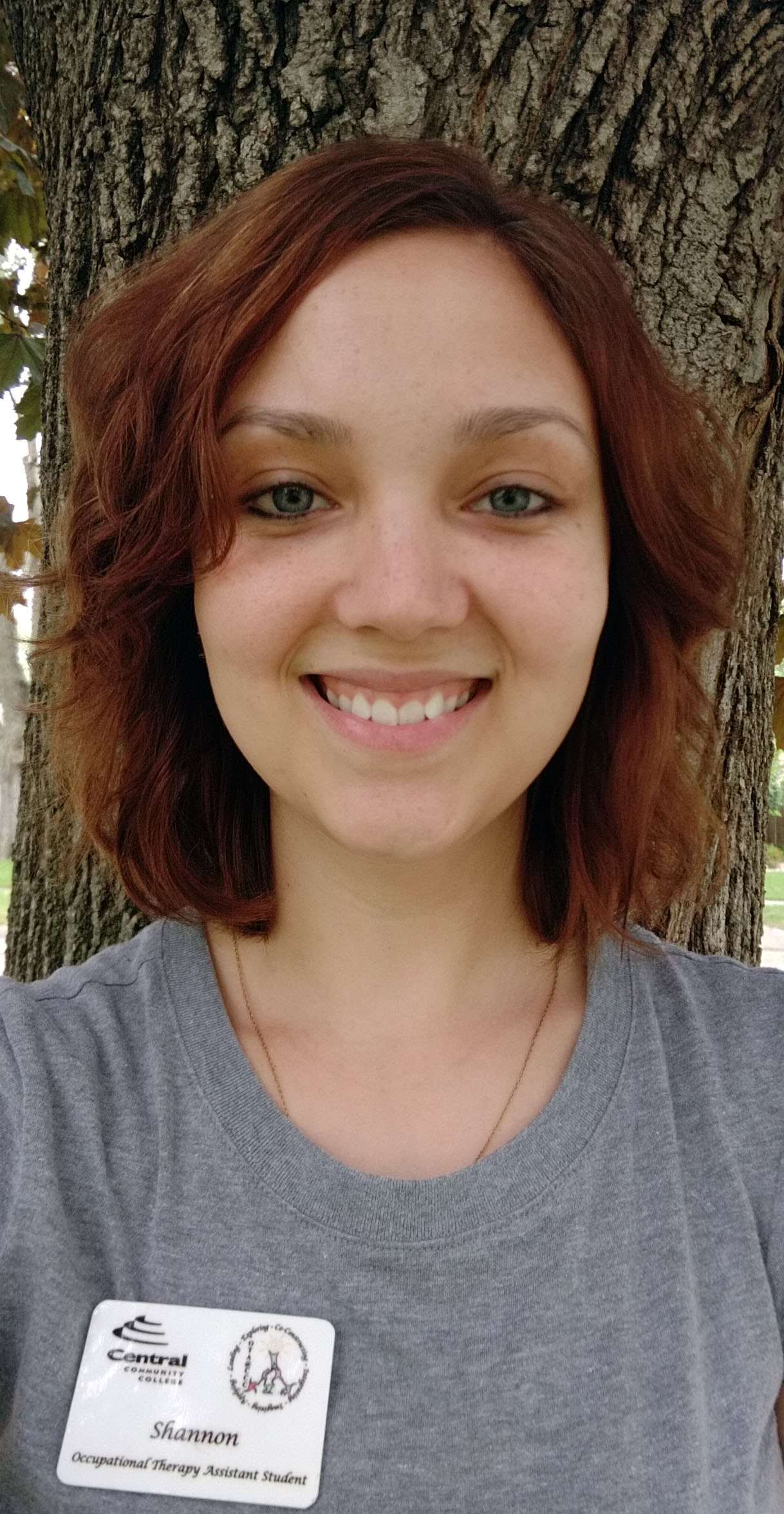
Shannon Cook is the most recent winner of Ensign’s SPARC award of $2,000. Shannon is currently completing her last year of the Occupational Therapy Assistant Program at Central Community College in Grand Island, Nebraska. She has demonstrated a love of serving those in need through her many volunteer experiences, including Project Homeless Connect, Opportunity House, and the Veteran’s Home of Grand Island Meals on Wheels programs. Shannon is highly regarded by her professors and her fieldwork supervisors and promises to be a wonderful asset to the occupational therapy profession.

As Shannon expressed in her SPARC application essay: “Each patient and the journey they are on is incredibly unique, and each will have their own set of qualities that that will impact their journey to recovery. I am so excited to enter the work force as an OTA practitioner with the role of providing the best care possible for my patients. It will be my mission to make sure I am walking side by side with each patient and helping them accomplish their goals, doing whatever I can to advocate for them and sparking new possibilities for every patient I meet.” Ensign Therapy congratulates Shannon and wishes her the best as she begins her therapy career.


It’s a Tie! Two Winners Earn SPARC Awards

SPARCCongratulations to Lorena Hawkins of Salem, OR, and Sarah Ensign of Salt Lake City, UT, who tied this quarter as recipients of our quarterly scholarship award. Each will receive $2,000 to assist them in completing their Occupational Therapy education, Sarah intends to graduate in May 2015 from the University of Utah, and Lorena will graduate in August of 2015 from Pacific University. The SPARC judges unanimously agreed that the essays written by Lorena and Sarah embodied the “spirit of Ensign.” Read their essays below…we think you will agree!

By Sarah Ensign, OT Student, University of Utah Division of Occupational Therapy, Salt Lake City, UT, Grad Date: 05/08/15

I sat in anticipation, waiting for the show to start. The sky around me was darkening. As I gazed upward I saw the first few stars of the night sparkling bright. Only a few stars, not quite dark enough yet. I glanced around me and saw many families sprawled across the lawn. Other children seemed just as excited as me for the fireworks! I saw several children playing glow stick tag while others were admiring the fountains, flowers, tanks, and other small fireworks some families had brought for entertainment while awaiting the grand show. I noticed a few fire trucks across the golf course, ready in case anything happened to go wrong. One year a small tree had caught on fire, but it was quickly put out. A cool breeze ran through my hair, causing me to shiver slightly. Almost time, I could feel it. Even though this was a small town fireworks show, it was one of my favorites. I saw some dark figures moving, preparing to light the first fuse. First a spark, a few quiet seconds, and then BANG. I jumped as a blinding light and deafening sound shot out across the lawn. BANG. BANG. BANG. Panicked parents grabbed their children and started to run as they realized what was happening. The firework show had begun, but instead of being launched into the sky above us, they were exploding on the ground. Flashes of green, red, gold, and purple lit up the air as I ran to safety with my family. The firemen scrambled to pull out their hoses and rushed to help get people out of harms way. It was the fastest, scariest, but most breathtaking fireworks show I had ever seen. Everything exploded in a matter of a few brief, alarming minutes. Thankfully no one was hurt and the firemen got everything under control. I wondered what had caused the fireworks to explode on the ground. What had gone wrong?

I later heard someone explain that one of the fireworks had fallen over and exploded on the ground, which ignited all the other fireworks and caused them to explode. That fourth of July was the most memorable I have ever had. Since that day, I have reflected on that night many times. But it wasn’t until I started studying occupational therapy that I recognized the lessons I learned that night apply to more than just fireworks shows. They are lessons that apply to me as a future health care professional.

Lesson 1: To light a firework, you first need a spark. I recently performed a needs assessment for a private, Montessori school that currently does not have an occupational therapist. The first day I arrived, many eager teachers greeted me. Their excitement showed on their faces as they told me they already had lots of questions and many students they wanted me to help. Even though I was the one who was supposed to be advocating for occupational therapy, I realized someone else had already created a spark of desire in these teachers. They looked to me in anticipation because I had something they didn’t: an education in occupational therapy. Throughout the semester, I collaborated with them to answer their questions and teach them strategies they could implement to increase their students’ performance in the classrooms. Without that original spark of desire, the teachers may not have been as willing to collaborate with me, and my fieldwork experience at that school would have been very different. Not all of my clients will have that same spark inside of them. Many will be struggling with significant challenges that impact their daily lives and leave them feeling hopeless and in the dark. Some of these challenges will pass quickly while others may last a lifetime. For all of these clients, I can be the spark they need to realize there can still be fireworks in their lives. By sharing my knowledge, experience, and excitement for occupational therapy, I will help my clients achieve their goals, renew their zest for life, and find joy in their daily occupations.

Lesson 2: It takes time for the spark to travel down the fuse before the firework ignites. Fireworks don’t explode the moment they are lit. For safety reasons, every firework has a fuse for the spark to travel on before reaching the chemicals inside the firework, giving people time to distance themselves from harm. Likewise, it takes time for the spark to turn into grand fireworks in therapy. Healing, recovering, learning, changing, and adapting are all processes that take time. Just as I couldn’t expect to know everything about occupational therapy the moment I started OT school, I can’t expect my clients to understand everything all at once. It will take time for them to master a new strategy and increase their performance in their desired occupations. It will be important for me to teach this concept to my clients. I did one of my level II fieldwork experiences in an outpatient pediatric setting. One mother I worked with had the mindset that if she didn’t see immediate results in her daughter, it was the fault of the therapists. She wanted the magical solutions for her daughter. Unfortunately, there are few instant, magical solutions when it comes to therapy. Improvement .It takes time and practice. And then it takes more time and more practice. One limitation to providing enough time and practice comes from our health care system today. Due to therapy caps and reimbursement from insurance, therapists cannot always give clients the time and practice they need. We have to use the limited time we have, even if that time isn’t the most ideal for the client. If I had freedom from corporate limitations in healthcare, I would provide therapy for the amount of time my clients and I determined was appropriate, not the amount the insurance companies dictate. I would love to create an “occupational therapy gym” that follows the model of fitness gyms. I would provide several one-on-one consulting sessions and then clients could access the gym anytime they want with a small membership fee. The OT gym would include equipment and materials for a variety of daily activities and occupations. I would have occupational therapy assistants available to help clients when they came in and I would be available to provide additional consulting sessions to make adjustments to therapy plans as clients make progress towards goals.

Lesson 3: Extra precaution should be taken to make sure the firework has a stable, solid base. To prevent an unsteady, possibly harmful practice, every therapist should have a solid foundation in evidence. Evidence-based research provides therapists with current knowledge about effective and non-effective practices. An evidence based practice creates questions and provides answers. Frequently searching the literature will create a solid foundation of knowledge that therapists can use when needed. I heard a piece of advice at a leadership training that has stuck with me that relates to my future practice as an occupational therapist. The speaker said that when preparing lessons, teachers should saturate themselves with knowledge on the topic and then adapt every lesson to the needs of the students. As a therapist for my clients, I want to saturate myself with knowledge and then adapt to each individual client. Not all pieces of information will apply to all clients. As long as I have a solid foundation in evidence, I will be able to provide my clients with the pieces of knowledge that are specific to them.

Lesson 4: Too much at once is potentially hazardous. More isn’t always better. Too many fireworks exploding at once created a dangerous situation. I’ve learned in my fieldwork experience that this concept applies to therapy as well. When I started my first fieldwork experience, I was eager to share all the new knowledge I’d gained. As I talked to parents about their children, I found myself wanting to share everything all at once. I figured the more I shared, the better. But I was wrong. I quickly learned that too much information at once was complicated and overwhelming to the parents. Parents often failed to implement any of the strategies at home with their children because it was too much for their busy lives. But I found that if I focused on one or two strategies at a time parents were much more likely to understand and be willing to implement strategies at home.

Lesson 5: Be prepared for something to go wrong. Had the firemen not been present and ready for a possible disaster, many people might have been seriously hurt. But because they were prepared for something to go wrong, they were able to act immediately. As therapists, we can expect things to go wrong. Not every therapy session goes as planned. Some days our clients are tired while other days technology breaks down. There are many factors that can cause something to happen that wasn’t part of the original, ideal plan. However, we don’t have to worry as long as we are prepared. I plan on having plan b’s and plan c’s, and maybe even plan z’s. As a therapist, I will need to be flexible and adaptable so I can adjust my sessions according to my client’s needs.

Lesson 6: Even when something goes awry, admire the beauty in it. Even though this firework show wasn’t the typical one, I was still in awe of the brilliance and beauty of the bright lights around me. It was a different beauty than if the fireworks were bursting in the sky amidst the shining stars, but still beautiful nonetheless. As a therapist, I can help my clients recognize that even though their experiences might not be what they ever wanted or expected, they can still find beauty in their lives. I have an aunt whose life suddenly changed one day on a trip in Florida. She was bitten by a mosquito carrying a virus that caused encephalitis. Her brain swelled so much she went into a coma. Thankfully she woke up after a month, but when she did, her legs were paralyzed. She had three young sons and needed to adapt to being a mother in a wheel chair. One day, a few years later, my mom was helping her clean. While my mom was scrubbing the toilet, my aunt said she’d give anything just to be able to scrub her toilet independently again. My aunt realized the beauty of a monotonous, undesirable chore many of us take for granted. My aunt has been an example to me and everyone of finding joy in her situation. Many refer to my aunt now by her nickname- Sunny.

I will soon be making the transition from student to professional. Even though I will no longer be an official student, I will forever be a learner. I love to study, read, and learn from experiences and opportunities. For the past 20 years, I’ve had remarkable teachers share their knowledge and experiences with me to help me learn about various subjects. But most importantly, they’ve taught me the importance of learning and thinking for myself. Soon it will be my turn to share what I have learned with my clients. My desire is to not just impart knowledge, but to provide hope, inspiration, excitement, and joy to my clients through my kindness, sincere concern, and passion for learning. As I utilize these six lessons and all the other lessons I’ve gained from my education and training, I will help each one of my clients ignite the beautiful fireworks inside themselves.


By Lorena Hawkins, OT Student, Pacific University School of Occupational Therapy, Hillsboro, OR, Grad Date: 8/08/15

Answering the question, How do I envision using my education and training to be a spark in the lives of others, is a huge question. I went to school to become an occupational therapist because I wanted to use my training and education to influence people’s lives for the better, to restore hope in a place where hope might be only but a distant thought, to help others restore a life which has been interrupted due to illness or injury, and to offer dignity in a situation and time when dignity may be lacking due to the need for cares.

I am the daughter of two high school graduates from a small town in Eastern Oregon. I am the sister of two high school graduates from the same small town in Eastern Oregon, and I will be the first one to graduate with this amount of education in both my immediate family and my extended family. While I have enjoyed where my passion for learning has lead me, and the level of degree as a doctor of occupational therapy, I still hold a deep passion for rural health and reaching the underserved population in our rural communities. I will be using my education and training to further direct service opportunities for all rehabilitation services in rural areas with a focus of tele health as a support for those services.

My practice philosophy will define occupational therapy as, “the restoring of a life that has been interrupted or impaired. It is the restoring of the whole person through equality of partnership in therapy as areas of concern which prevent participation in meaningful and purposeful activities are identified and solved.” My clients will be those who come from all stages of life, all walks of life, and from all corners of the world. Their challenges are multifaceted and may pose physical, emotional, cognitive, and or spiritual barriers that prevent them from fully participating in their lives. They come to us in in partnership to address their challenges and to learn how to reengage in their wants and desires of performance. I will strive to provide individual client-centered therapy addressing barriers and supports of occupational participation. My desire is to provide a holistic approach to the client by learning who they are, what they like to do, and where they do the things they like to do through interview and conversation. Once these aspects are learned, we stand in the gap between desires and doing by educating and problem solving through interventions that and meaningful occupation based therapy.

The values which drive my practice as a future therapist will be:

  • All individuals are afforded the respect due them based on who they say they are.
  • Restorative therapy is a partnership between myself and the client and obtained through open, honest, and informative communication.
  • Individuals have the right to refuse service without judgment after expressing concerns and fears about participation openly and honestly from each side of the discussion.
  • Therapy is not a secret. Clients will be informed as to why they are doing what they are doing.

Finally, I am inspired by evidence based practice and research. Evidence based practice is the lens in which all models and frameworks must pass through on their way to existence, gives me a place to learn and grow as a practitioner, and affords me the opportunity to synthesize my knowledge and reasoning. My spark will be displayed in many ways and reach many people once I complete my goal which has been fueled by a passion for learning. For my clients it will be a spark of knowledge and insight to those opportunities for us to work together as we restore or adapt to life after interruption. For my nieces and nephews, I will be a spark which represents the importance of never giving up on education and the career and quality of life which can be gained through education. For myself, I will be a spark of accomplishment and confidence based on completing a long standing goal and never giving up. This spark will then be transferred to my clients to barrow when their confidence and belief is faltering.

Honestly, I am not a great prose writer. Nor am I 4.0 student, but I do care. I care so much for my clients and their situation which they are facing. I have a passion for the therapy that has taken dedications to see come to pass. It excites me to know I get to spend the rest of my life, as being an occupational therapist is really a lifelong career, influencing therapy. Not just among colleagues and patients but also on a political level through advocacy for the profession. The future is brighter than a spark for me. For me, the future is a star. The amazing thing about a star is this: the spark/event which created the light we view at night has long burned out. but we still see the evidence of that spark all these many light years later. In essence when we view the stars at night, we are looking at a memory. I so long to be such a spark for a client, and their family, that when they look back on the event of us meeting it is only a light shining of a memory in a dark time.